

Fermented vs rotten
The science behind what's safe and risky

👋🏻 Hey! If you prefer the video format of this content, click here to watch.
You’re feeling peckish, so you head to the kitchen to grab an orange for a snack. But as you pick it up, you notice a cloud of dust coming off it. Oh no—another rotten orange! Is it too early for a glass of wine? After all, it’s made from fruit too. That might do the trick…
The orange is rotten. The wine is fermented. Both processes involve the growth of tiny living things in food. So, what’s the difference between fermentation and rotting?
It’s basically down to the intention, or lack thereof, of the result. When crafting wine we need some microbes to come and transform grape juice into wine. That’s a fermentation because we wanted that to happen. In contrast, I guess you were not looking to grow mould on that orange you were going to snack on. It smells bad and you’re not too sure if it’s safe to eat, so you throw it away. That’s a rotting process.
Then, what about the first fermentation?
I see the million-dollar question coming… Then, what about the first fermentation? The one no one expected because no one knew the growth of microbes in food could yield delicious and beneficial foods. There was no intention there, so it must have been a rotting process, right?
Well, I guess it’s not a matter of science, but rather a matter of definitions. Even if we, as humans, had never paid attention to fermentation and rotting, those processes would still exist, because, in essence, they are the same: microorganisms feeding from substances they find in food and metabolising them into other resulting substances. So first the microbes eat, then we see the result and finally, depending on what we think about the result, we give it different names.
What are microorganisms?
My dog is a beautiful living organism. He can reproduce, he can grow (although he’s already quite big - he weighs 40 kg) and he responds to stimuli (he moves his tail when I say “park”). I don’t know what other characteristics make him a living organism (#NotABiologist), but you get the point.
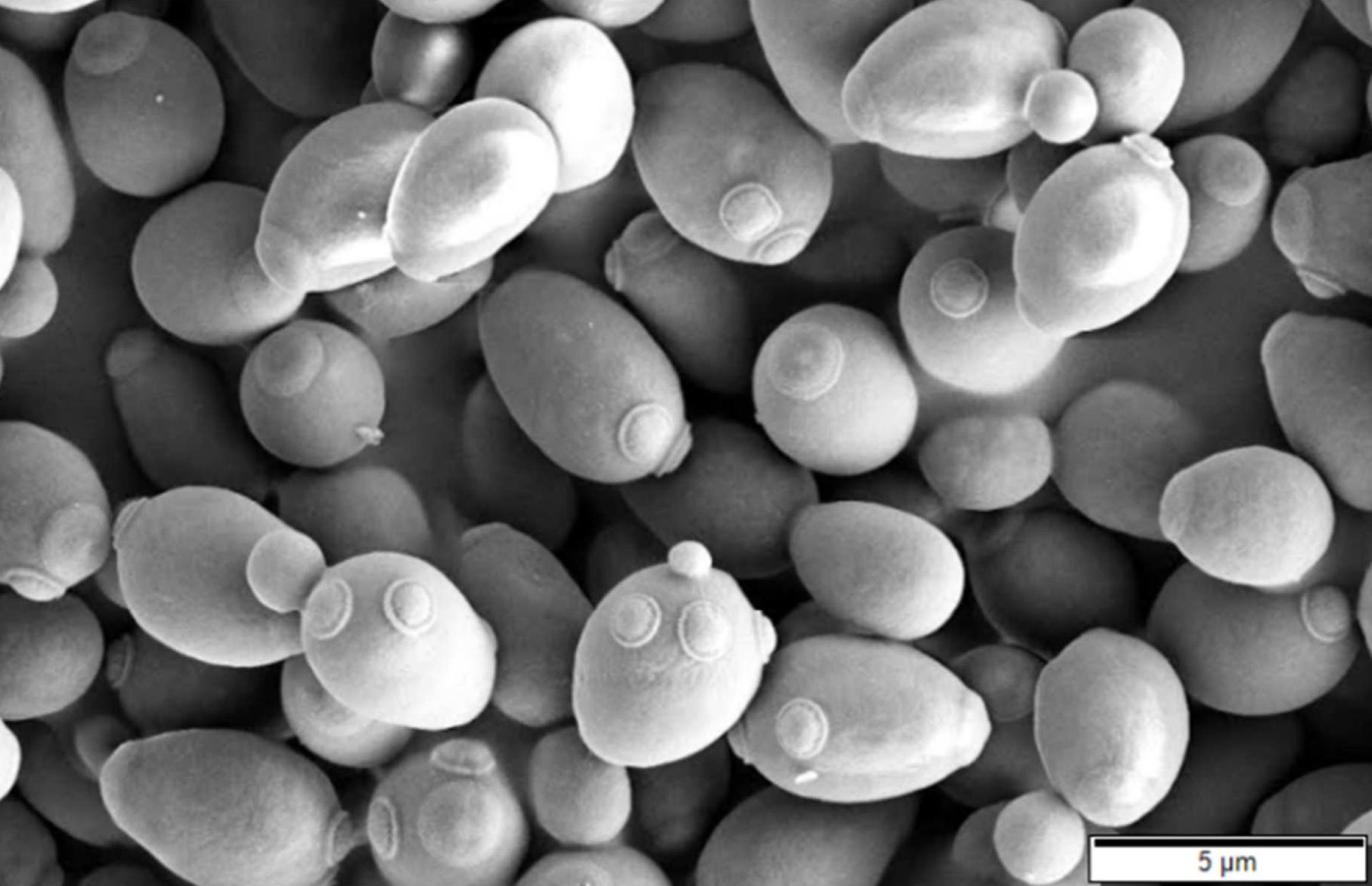
The one in the picture is not my dog. It’s Saccharomyces cerevisiae. He’s like a friend to me because he’s always there when I drink a beer. He’s very tiny, so I don’t get to see him very often, only when I’m in the lab. He can reproduce, he can grow (although he always stays small) and he responds to stimuli. I don’t know what other characteristics make him a living organism, but you get the point.
They’re both living organisms, it’s just that my dog is huge and “Sacch beer” is tiny. In science, tiny is usually referred to as “micro-”. Microorganisms.
My dog is an animal, but microorganisms can correspond to other living kingdoms. They can be bacteria, fungi, algae, and so on. Regarding food, when talking about microorganisms we refer specifically to different species of bacteria and fungi.
And what about moulds and yeasts? Well, those are different types of fungi. Moulds are multicellular (formed by more than one cell), whereas yeasts are unicellular (formed by just one cell).
What types of microorganisms are present in fermentation and rotting processes?
From the conversations I’ve had, I get the feeling that people generally believe that yeasts and moulds are responsible for fermentation, whereas it’s bacteria that rot our food. However, many fermentation processes involve bacteria, and many moulds and yeast can rot food.
Maybe you’ve heard about “lacto-fermentation”. It’s a type of fermentation done by a specific type of bacteria that produce lactic acid, hence the name. They are called Lactic Acid Bacteria. Another example you might be familiar with is kombucha, for which you need SCOBY to ferment tea. SCOBY stands for Symbiotic Culture Of Bacteria and Yeast.
Is rotten food unsafe and fermented food safe?
I think that the belief that yeasts and moulds are the only microorganisms responsible for fermentation is due to the fact that bacteria are typically the ones that cause illness. But as it goes with people, there are also good and bad bacteria.
Does that mean that fermentation can be risky?
Well, for starters, there’s always a risk when eating food. But don’t panic, if you follow good hygiene practices when cooking, the risk is almost non-existent. And if you’re looking to start fermenting, just follow the general safety measures. By doing so, you’ll be making it very difficult for the bad microbes to grow and survive. (I’ll leave some resources down below).
So rotten food is extremely dangerous, right? Well, not exactly. Rotten food is food where some microorganisms have grown in a way that wasn’t desirable. This can happen because of two different things: 1, because the microbes that have grown are harmful; or 2, because they have transformed the food into something that we find disgusting.
Often, pathogens are very difficult if not impossible to detect by simply observing the food, and it requires some lab tests to confirm if and what has grown in the food.
On the other hand, disgusting food is not inherently unsafe. As I’ve just said, pathogens are usually indetectable to us, so risky food is usually not disgusting, hence why we get food poisoning more often than we’d like. In these types of cases, we find the foods repulsive because microorganisms have changed the colour, texture, smell or flavour of the food, so we no longer want to eat them. But usually, the microorganisms that cause this type of rot are not pathogens, that is, they’re not harmful to us. But be careful, I’m not telling you to start eating all those rotten tomatoes you have in the bottom of your fridge. The thing is that the microbes that make the food disgusting can grow in similar environments to the ones pathogens do. So yes, the mould in the tomato may not be harmful, but some pathogens might have also grown, and unless we go to the lab to test it, we won’t know.
The microorganisms that ferment our food usually tolerate other types of environments, that’s why, if you follow safe hygiene practices, fermented food should not be risky, while rotten food is. If the microbes that ferment our food have grown, it’s likely that the harmful ones haven’t.
Why would I want microorganisms to grow in my food?
Maybe you’re wondering why we would want to grow microbes in our food in the first place. That sounds disgusting, right? The truth is, microorganisms have helped us preserve our food while also giving us some new amazing flavours. But this is a whole other topic for another day.